BHM Practical Classes Explained: Kitchen, Bakery, Service and Front Office Labs
Published Date: 30 Oct 2026
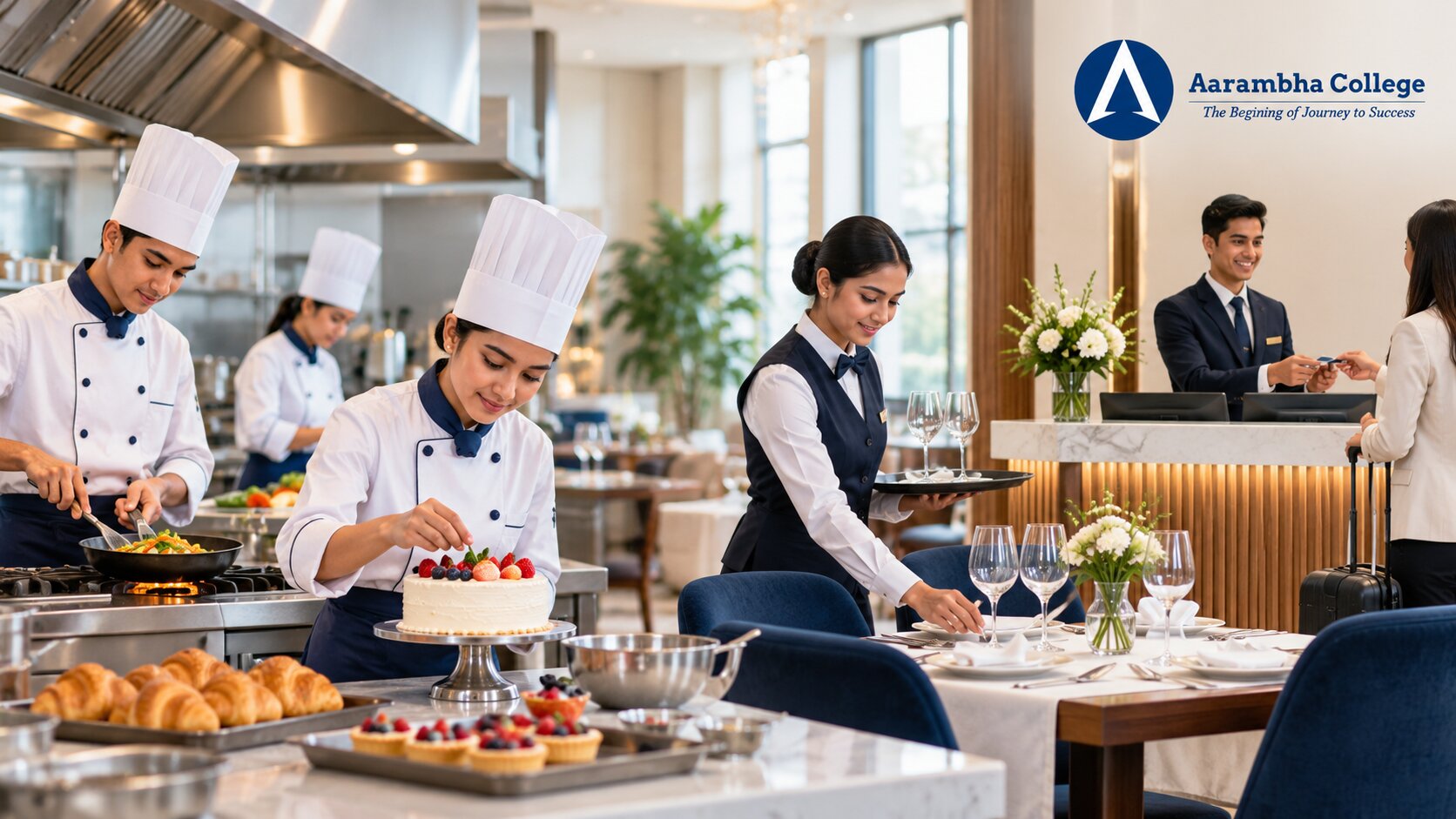
BHM practical classes help students develop essential hospitality skills through hands-on training. From preparing meals and baking pastries to serving restaurant guests and handling hotel reservations, students learn how different hotel departments operate and apply their classroom knowledge to practical tasks.
In Nepal, the Bachelor of Hotel Management (BHM) programme under Tribhuvan University combines theoretical learning with practical training in food production, bakery, food and beverage service, and front office operations. These subjects form an important part of BHM education, helping students build the skills needed to work in the hospitality industry.
But what do students actually do during these practical sessions? How are the classes conducted, and what skills are they expected to develop? This guide explains the activities involved in each practical area, how students are assessed, and what to expect from practical training throughout the BHM course.
What Are BHM Practical Classes?
BHM practical classes are supervised learning sessions where students perform hotel-related tasks, including food preparation, restaurant service and guest reception. Theory classes explain how and why procedures work; practical sessions let students try them and learn from feedback.
A theory lesson may explain cooking temperatures; a practical exercise allows students to control heat while preparing a dish. Teachers can observe the technique, identify errors and offer specific feedback.
Practical training is part of the academic learning process in Tribhuvan University's BHM programme. The TU Faculty of Management provides the academic framework, while affiliated colleges organise learning activities according to their curriculum and available facilities.
Which TU BHM Subjects Include Practical Training?
TU's BHM programme includes practical work within operational subjects such as Food Production and Patisserie, Food and Beverage Service, and Front Office Operations. These are university subjects, not separate degree specialisations.
In the published TU BHM course cycle, Food Production and Patisserie I and Food and Beverage Service I appear in the first semester, while Front Office Operations I appears in the third. Semester placement should be checked against the curriculum applicable to each student’s batch.
The course structure identifies practical assessment in several subjects, but the exact lessons, equipment and weekly timetable depend on the college. Students should check the syllabus followed by their batch.
What Do Students Learn in BHM Kitchen Practical Classes?
BHM kitchen practical classes focus on ingredient preparation, cooking techniques, hygiene and equipment handling. Students move from basic cuts and cooking methods to recipes requiring several coordinated steps.
Under the BHM curriculum, Food Production and Patisserie subjects introduce students to cooking methods, ingredients and professional kitchen practices.
What Cooking Skills Do Students Learn in BHM Practical Classes?
Kitchen training usually begins with understanding the equipment and preparation methods used in food production.
Students may practise:
- Identifying kitchen tools, knives and utensils.
- Washing, peeling and cutting vegetables.
- Measuring ingredients according to recipes.
- Preparing stocks, soups and basic sauces.
- Using boiling, steaming, frying and roasting methods.
- Arranging ingredients before cooking.
- Presenting prepared food neatly.
One important kitchen concept is mise en place, which means preparing and arranging ingredients and tools before cooking begins. The same preparation helps students avoid searching for utensils or ingredients while food is cooking.
What Types of Cuisine Do BHM Students Learn to Prepare?
Food production coursework introduces specific ingredients and methods used in Nepali, Indian and Western cooking.
TU's 2024 second-semester Food Production and Patisserie II syllabus covers Indian gravies, Nepali cuisine, pasta, salads, dressings, cakes and pastry preparations. Practical activities should follow the applicable lesson plan rather than an assumed fixed menu.
For example, preparing a gravy can help students observe how ingredients, heat and cooking time affect its texture and flavour.
How Do BHM Students Learn Food Hygiene and Kitchen Safety?
Food hygiene is essential because mistakes in handling ingredients can affect guest health. Students learn why clean utensils, proper food storage, personal hygiene and safe handling procedures matter. They also practise maintaining an organised workstation while preparing meals.
For example, using the same unclean cutting board for raw meat and ready-to-eat vegetables can transfer harmful germs from one food to another. Students learn to clean or separate equipment to prevent this.
What Happens in BHM Bakery and Patisserie Practical Classes?
Bakery and patisserie practical classes teach students how to prepare breads, cakes, pastries and desserts using suitable ingredients and baking techniques.
Bakery generally focuses on products such as bread and cakes, while patisserie includes pastries, desserts and more detailed preparation methods.
Within TU's BHM curriculum, patisserie is included in food production subjects rather than being a separate degree specialisation.
Why Do Accurate Measurements Matter in Baking?
Accurate measurement is one of the most important skills in baking. Students learn how flour, eggs, sugar, butter, yeast and raising agents affect different products. They also practise weighing ingredients, preparing mixtures and controlling baking temperatures.
For example, adding too much flour can make a cake dense, while incorrect oven temperature can affect how evenly it bakes.
Comparing the finished product with the recipe's expected result helps students identify what to adjust next time.
How Do Students Prepare Cakes, Pastries and Desserts?
Bakery practical activities may include preparing sponge cakes, pastry dough, baked desserts and other products included in the syllabus. Students can practise mixing, kneading, shaping, baking, cooling and decorating techniques.
Puff pastry needs repeated layering of dough and fat to create a flaky texture. Sponge cakes depend on appropriate mixing and baking methods. Students can also practise portioning and presenting the finished products consistently.
What Do Students Practise in Food and Beverage Service Labs?
Food and beverage service practical classes introduce the sequence of restaurant service, from preparing a dining area and welcoming guests to recording orders, serving meals and clearing tables.
Students need to communicate orders clearly and coordinate with the kitchen so food reaches the correct table.
How Do Students Practise Restaurant Table Setup?
Before restaurant service begins, staff prepare the dining area.
In practical sessions, students may learn to:
- Arrange tables and chairs.
- Place tablecloths and napkins.
- Position plates, glasses and cutlery.
- Identify restaurant service equipment.
- Prepare service stations.
- Check table cleanliness and presentation.
A table setting must match the menu and style of service so guests have the cutlery and glassware they need.
How Do BHM Students Practise Taking Orders and Serving Food?
Restaurant service training often includes simulated guest interactions. In a simulated service exercise, one student acts as a guest and another as a server. The server welcomes the guest, explains menu items, repeats the order to confirm it and passes the details to the kitchen.
Students may also practise clearing tables, presenting bills and responding to guest requests. This allows the teacher to assess order accuracy, timing, tone and handling of guest requests.
What Restaurant Service Styles Do BHM Students Learn?
Two common restaurant service methods are plated service and buffet service. In plated service, meals arrive individually arranged on plates. In buffet service, food is displayed for guests to select, with staff helping where needed.
The practical arrangements differ: plated service needs coordination with the kitchen, while buffet service requires careful presentation and regular refilling.
What Do Students Learn in Beverage Service Practicals?
Beverage service practicals may cover how to prepare the service area and present drinks to guests.
In a sample tea or coffee service task, students can select cups and other serving items, arrange the tray and practise serving in the correct order. The exercise may differ according to the syllabus and facilities.
Students should distinguish TU's Bar and Beverage Service subject from any barista, bartending or mixology elective or additional training. The availability of such options must be confirmed with the college.
What Happens in BHM Front Office Practical Classes?
BHM front office practical classes teach students how to handle reception operations, reservations, guest arrivals, departures and common hotel enquiries.
The front office is responsible for important interactions between a hotel and its guests. Students therefore need both communication skills and an understanding of hotel procedures.
How Do Students Practise Hotel Reservations and Check-In?
A simulated check-in can begin with a guest who already has a reservation. The student acting as receptionist confirms the booking, checks the assigned room information and explains relevant hotel procedures.
The exercise may involve a sample registration record or training software, depending on available facilities.
A teacher can assess whether the student follows the correct sequence, records information accurately and explains the next steps clearly.
How Do Students Practise Handling Guest Complaints?
Role-play helps students learn how to respond when a guest is dissatisfied. For example, a guest may arrive before the reserved room is ready. The student must listen, check the room status, explain the situation and coordinate with the appropriate department.
The exercise tests whether the receptionist gives accurate information without promising a solution that has not been confirmed.
How Do Students Practise Hotel Check-Out Procedures?
Check-out practicals teach students how a guest's stay is closed in the hotel's records.
Students may practise reviewing sample bills, explaining charges, recording payments and completing check-out documentation.
Before completing check-out, reception staff may need to confirm room charges and other services used by the guest. Practising this sequence helps students understand why accurate bills and communication with housekeeping and accounts matter.
How Are Kitchen, Bakery, Service and Front Office Practicals Different?
Each practical area develops different skills and requires a different approach to hospitality work.
|
Practical area |
Main activities |
Skills developed |
|
Kitchen |
Cooking, ingredient preparation, plating |
Food production, hygiene, timing |
|
Bakery |
Cakes, pastries, desserts |
Accuracy, patience, presentation |
|
Food and beverage service |
Table setup, orders, serving |
Communication, teamwork, guest service |
|
Front office |
Reservations, reception, check-out |
Organisation, communication, problem-solving |
The comparison shows different practical priorities: technical control in food preparation, precision in bakery work, guest interaction in service, and accurate information handling at reception. Students can use these differences to consider which BHM career pathway fits their interests.
How Are BHM Practical Classes Conducted?
A practical session commonly follows a sequence of explanation, demonstration, supervised activity and feedback.
The teacher explains the task and its safety requirements, then students prepare the necessary equipment and perform the activity individually or in groups.
Afterwards, the teacher may review technique, finished work, hygiene or communication. The exact duration, group size and feedback method depend on the college's teaching arrangements.
How Are BHM Practical Classes Assessed?
Several operational subjects in TU's published BHM course cycle have distinct internal, theory and practical marks. For example, Food Production and Patisserie I and Food and Beverage Service I are each shown with 20 internal, 30 theory and 50 practical marks out of 100.
Teachers may assess the steps followed, safe equipment use, hygiene, accuracy and food presentation or guest communication, depending on the subject.
Those figures come from the published course-cycle document and must be checked against the curriculum applicable to the student's batch; they do not establish any individual college's assessment timetable.
How Can Beginners Prepare for Their First BHM Practical Class?
Students do not need professional hotel experience to begin. Time limits, exact measurements and guest role-play may feel unfamiliar at first, but supervised practice and feedback help students improve.
However, developing a few basic habits can make practical sessions easier:
- Practise basic hygiene: Understand handwashing, cleanliness and safe food handling.
- Improve communication: Practise polite greetings and clear explanations.
- Follow instructions: Read recipes and activity procedures carefully.
- Develop time management: Organise tasks before starting.
- Work cooperatively: Learn to communicate with classmates during group activities.
- Accept feedback: Use corrections to improve future performance.
Students interested in cooking can begin with simple recipes at home, while those who prefer guest service can practise everyday conversation skills.
The aim is to become comfortable with the learning process, not to master professional hotel operations before joining college.
How Do BHM Practical Classes Help During Internships?
Practical classes introduce students to the basic procedures and working habits used in hotel departments.
For example, a student who has practised restaurant table setup may find it easier to understand service duties during an internship. Similarly, simulated guest registration exercises can help students recognise front office procedures in a real hotel.
Practical classes and BHM internships serve different purposes. College sessions allow students to learn and practise hospitality procedures under supervision, while internships introduce them to real hotel operations, workplace responsibilities, professional standards and guest interactions.
What Should Students Check About BHM Practical Facilities Before Admission?
Before choosing a BHM college, check how students use its practical facilities, not simply whether a kitchen or training room appears on the website.
Ask about individual practice time, class size, equipment access, supervision and materials included in the quoted fees.
Important questions include:
- Which practical training areas are available?
- How often are kitchen, bakery and service classes conducted?
- How many students share one workstation?
- Which tools, ingredients and materials are provided?
- How are practical examinations assessed?
- Are uniforms and practical materials included in the fees?
- How does the college support preparation for industrial exposure?
Students comparing BHM colleges across Nepal should request clear information about these arrangements rather than relying only on promotional descriptions.
Explore BHM Practical Learning and Admission Requirements
A course outline explains what you study, but the college can clarify how practical classes are taught and assessed. Check these arrangements before deciding where to enroll.
Before enrolling, review the BHM syllabus and contact the admissions team to confirm practical schedules, required materials, assessment methods and opportunities for hands-on learning.
FAQs
Do BHM students need cooking skills before joining college?
No, BHM practical classes teach students basic food preparation, cooking techniques and kitchen safety from the beginning.
Can BHM students focus only on kitchen practical classes?
No, TU's BHM curriculum includes compulsory practical subjects in food production, food and beverage service, and front office operations.
What Equipment Do Students Use in BHM Practical Classes?
Students use kitchen utensils, baking tools, restaurant service equipment and front office training materials to practise hotel operations.
Do students use hotel reservation software in front office practicals?
Front office training covers reservations and check-in procedures through role-play, sample booking records or hotel software where available.
Are BHM practical classes conducted every day?
There is no fixed daily schedule across all colleges. Practical sessions are arranged according to the semester, subject and college timetable.
Do students have to purchase their own kitchen equipment?
Students should confirm which uniforms, kitchen tools and practical materials are provided by their college and which must be purchased separately.